Showing posts with label Catherine de Medici. Show all posts

Thursday, 19 March 2026

Taken in Touraine - spring at Chateau de Chenonceau.

Château de Chenonceau in spring, with blooming gardens, reflections over the River Cher, and the elegant architecture of one of the Loire Valley’s most iconic châteaux.

Château de Chenonceau in spring is a study in balance, between architecture and nature. With the season bringing fresh colour to the surrounding gardens. In spring, that legacy is softened by tulips, blossom, and carefully tended parterres that frame each view without overwhelming it.

Here in Touraine, the arrival of spring does not announce itself loudly. It reveals itself gradually in the first blooms along the paths and in the calm harmony that defines Château de Chenonceau.

Early spring is a good time to visit before the real onslaught of tourists to one of Touraine's most popular sites.

“In Touraine, even the silence tells a story.”

Part of the “Taken in Touraine” Series

Every Thursday, we pause somewhere in Touraine — a village, a vineyard, or a quiet riverside — to capture the spirit of this timeless Loire region.

 Discover more about the Loire Valley
Browse the full series

© Experience Loire — Taken in Touraine · Back to Home 


Friday, 3 May 2019

2019 - more than just a nod to the Renaissance in the Loire Valley


Rear elevation of Chateau de Chambord celebrating 500 years in 2019

Our region, Centre-Val de Loire is this year taking advantage of three events from 500 years ago to highlight the rise of the French Renaissance (rebirth). The actual birth of the Renaissance here is normally traced back to the French invasion of Italy in 1494 as a means of providing a starting point of linking the Italian influence on the country’s art and cultural heritage.

The word itself is a great deal younger and credited to French historian Jules Michelet who used it in his 1855 work ‘Histoire de France'.

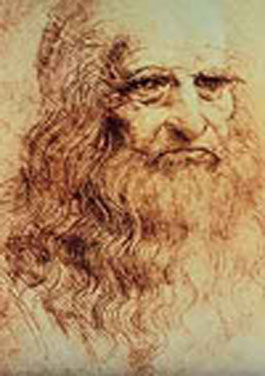
Leonardo de Vinci died 500 years ago

The three events are, the commencing of the building of the mighty Chateau de Chambord, a truly remarkable example of Renaissance architecture, the death of the ‘Renaissance Man’ himself Leonardo de Vinci after only three years in France and perhaps less obviously, the birth of Catherine de Medici often referred to as the ‘Renaissance queen of France', in Florence.

Catherine de Medici born 500 years ago

So there is an amazing amount of material to highlight this period of Renaissance and not surprisingly the region is to offer up around 500 different events in various locations in celebration of a wonderful touristic opportunity to add to an already crammed full, treasure chest of gems…and why not!

Officially kicked off with President Macron's visit to Amboise and Chambord yesterday.

Some useful links:


Saturday, 6 January 2018

The evolution of Chateau de Chenonceau


Most of  the guests at our vacation rentals want to visit the wonderful Chateau de Chenonceau. They will certainly know the view of its arches spanning the river Cher but what they may not be aware of is how and when it transformed from what would have been a relatively small but perfectly formed renaissance chateau, much like the chateau  at Azay-le-Rideau (below) to the magnificent example we see today.


In 1512 Thomas Bohier had bought a small castle which sat on the site and had it raised,leaving only the tower that now stands adrift from the main building. He left the building of its replacement to his wife Catherine Briconnet who had the small renaissance chateau built to replace it. It was sadly given over to the crown years later to pay off the debts of her family. Francois I, the reigning monarch indulged his son, Henri (II) by giving him the castle, which, after he became king, he gave it to his mistress Diane de Poitier. It was she who had the bridge added to link to the opposite bank of the Cher.


After the death of the king his wife Catherine (de' Medici ) took revenge on his mistress by taking possession of Chenonceau and giving her the less desirable chateau at Chaumont-sur-Loire in exchange. It was the queen who made inspirational  decision to add the gallery and ballroom over the bridge leaving us the now iconic landmark we see today.